
Home / Products
Products
Battery Packs Designed Around Your Platform.
We offer configurable battery pack architectures for high-power small UAVs, agricultural drones, and larger mission-specific applications. Chemistry, electrical architecture, connectors, BMS, enclosure, sourcing and qualification are defined by each program, including region-specific procurement requirements where applicable.
Page updated
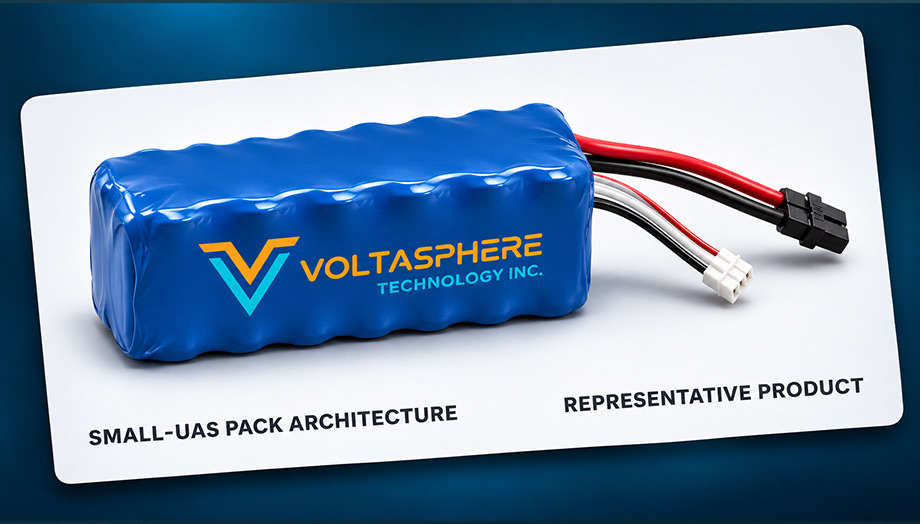
Compact, high-discharge packs
4S / 6S-class configurations using pouch or cylindrical cells, selected to balance power, flight profile, mass, manufacturability and availability.
Engineering considerations
- Peak & sustained discharge
- Connector & harness
- Mechanical envelope
- Cell selection
- Environmental exposure
- DFM
- Test & production consistency
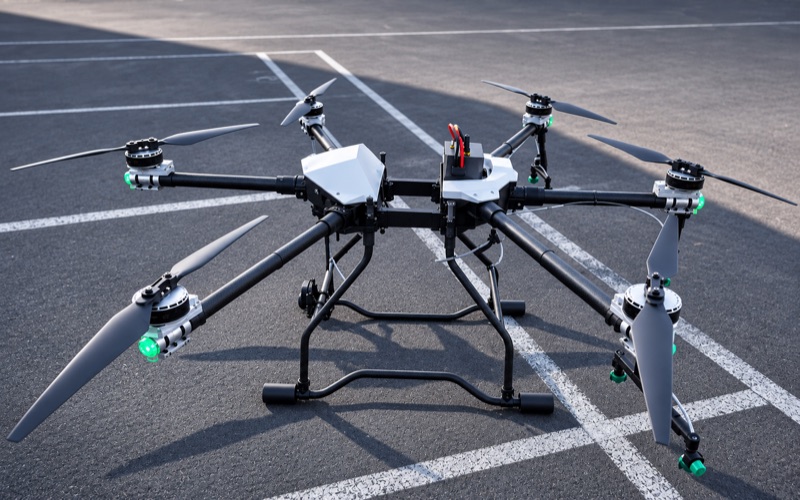
Field uptime and cycle economics
Battery systems for operations where field uptime, charge strategy, serviceability and cost per operating cycle matter. 14S / 18S-class designs for spraying, spreading, mapping and related platforms.
Engineering considerations
- Flight-duration targets
- Payload-dependent duty cycle
- Usable energy
- Charging interface
- BMS-to-aircraft comms
- Thermal behaviour
- Swap cycles
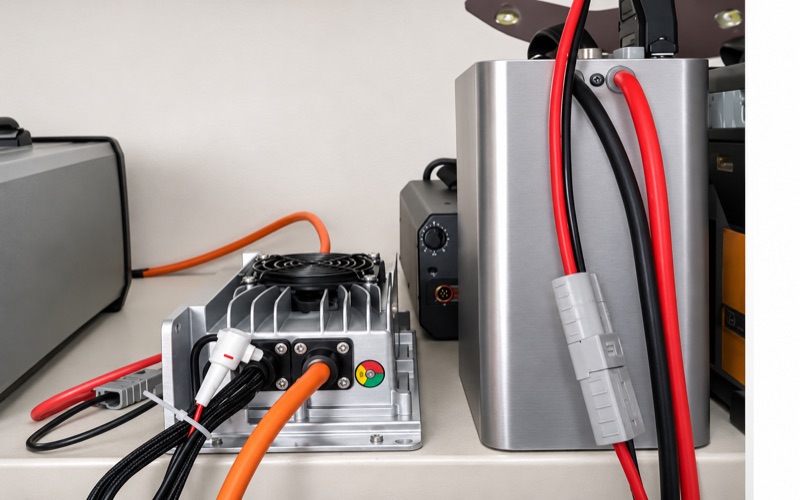
Larger UAV / VTOL, ground, surface, underwater
Application-specific pack architectures with appropriate electrical protection, mechanical packaging, environmental design and BMS integration. Feasibility, readiness, testing and manufacturability are evaluated individually.
Typical scope
- Protection strategy
- Sealing & pressure
- Mechanical packaging
- BMS integration
- Program-specific qualification
Anatomy of a pack
What we define for every program
Cells, series count, BMS functions, main and balance connectors, harness and enclosure are chosen together. The diagram shows a representative 6S small-UAS architecture; the same decisions scale to 14S and 18S agricultural packs and to custom systems.
Specifications
Representative NCM platform configurations
Representative engineering configurations. Not an assertion that every variant is qualified, certified, stocked or interchangeable. Energy is nominal voltage × capacity. Series count assumes 3.6 V nominal per NCM cell.
| Model | Series | Nominal V | Capacity Ah | Energy Wh | Max cont. A | Weight kg |
|---|---|---|---|---|---|---|
| Kraton 1 | 4S | 14.4 | 6 | 86 | 50 | 0.35 |
| Kraton 2 | 6S | 21.6 | 12 | 259 | 100 | 1.0 |
| Comet | 6S | 21.6 | 25 | 540 | 120 | 2.9 |
| Zenith | 14S | 50.4 | 25 | 1,260 | 100 | 8.0 |
| Nova | 14S | 50.4 | 50 | 2,520 | 175 | 15.5 |
| Pulsar | 18S | 64.8 | 64 | 4,147 | 175 | 16.0 |
| Titan | 18S | 64.8 | 150 | 9,720 | 100 | 42.0 |
BMS, ingress protection, connectors, operating temperature, discharge behaviour and certification vary by design. Product data sheets are available on request.